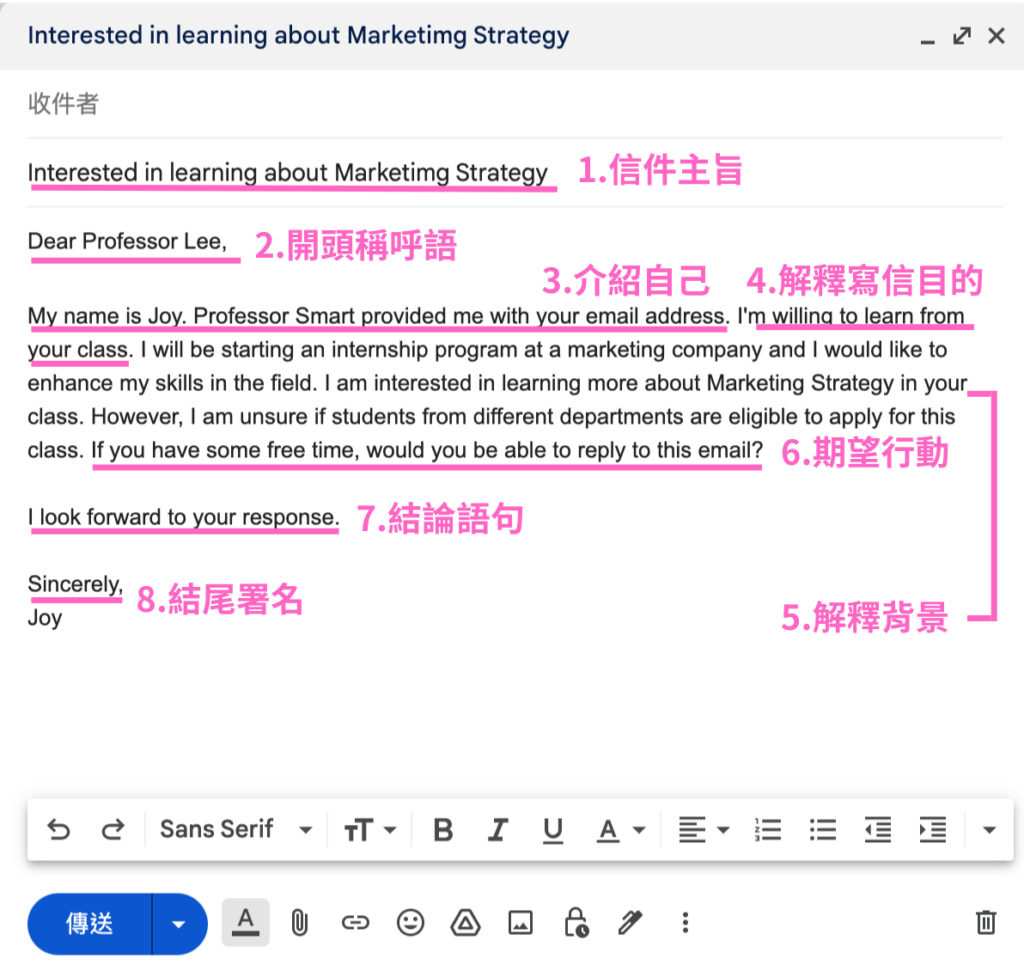
Thank you for sending through the meeting invitation. I have confirmed my availability and added it to my calendar.
I look forward to discussing the project details with you next Tuesday.
Best regards,
[Your Name]
範例二:感謝合作機會並期待開始
在確認一項新的合作案或收到訂單後,表達感謝與期待:
Dear [Partner’s Name],
We are delighted to confirm the receipt of your purchase order No. [Number]. Thank you for your trust in our services.
The team is looking forward to commencing this project and delivering excellent results.
Sincerely,
[Your Name]
範例三:求職後感謝面試機會
面試後的感謝信是展現專業與禮貌的好機會:
Dear [Interviewer’s Name],
Thank you again for taking the time to interview me for the [Position Name] role yesterday. I enjoyed our conversation and learning more about the team’s goals.
I very much look forward to hearing about the next steps in the process.
Anticipate: 較為正式,帶有「預期並為之做好準備」的意味。例如:We anticipate a successful product launch.
Await: 較為書面化,常用於正式文件或法律文書。例如:We await your instructions.
Be eager to: 表達更強烈的熱情與渴望。例如:We are eager to start the new partnership.
Hope to: 語氣較為溫和、委婉,期待中帶有一點不確定性。例如:I hope to see you at the conference.
根據統計,在專業商務溝通中,適時變換表達方式,能讓對方感受到你對語言的精準掌控力,從而提升信任感。
常見問題解答
Q1: 「Look forward to」後面可以接子句嗎?
通常不直接接that子句。正確做法是接動名詞或名詞。若一定要表達子句內容,可改寫。例如,不說「I look forward that we will work together.」,而應說「I look forward to working with you.」或「I look forward to the opportunity that we will work together.」。
Q2: 在Email主旨欄可以使用「Look forward to」嗎?
可以,但通常較為簡化。例如,回覆會議邀請時,主旨可以是「Looking Forward to Our Meeting on [Date]」。這能讓收件人一目了然。